Categories
Uncategorized

Microsoft Bing and Xbox.com Support World IPv6 Day

June 8 is just around the corner, and along with other members of the Internet Society (ISOC), Microsoft will participate in World IPv6 Day. (For more information on IPv6, you can Bing it: http://www.bing.com/search?q=ipv6)

On this one-day test, we will provide support for IPv6 on Bing.com and Xbox.com as part of a broad industry effort to validate the readiness of this new foundation of the Internet. Consumers with IPv6 Internet capabilities – with both a device that supports IPv6 (like a Windows 7 PC) and support from your Internet provider – will automatically utilize IPv6 when connected to participating website. While the protocols are different, the browsing experiences of IPv4 and IPv6 are identical. In fact, most users of these services won’t even notice that this test is happening. Users with only IPv4 connectivity will continue to connect via IPv4.

The Internet is gradually shifting to IPv6, representing a foundational shift in every Internet experience. At Microsoft, we have been working towards the promise of a smooth and prudent transition, and teams across the company have been readying our products and services to support IPv6. Many of our products, like Microsoft Windows, have had robust IPv6 support for years. Microsoft takes this transition very seriously, and this test is one of many investments to ensure there is no interruption of service for our users as IPv6 is widely deployed.

As noted, most people will be fine on World IPv6 Day.  As noted on the Windows IPv6 blog, some users with a misconfigured Internet connection may lose network connectivity when accessing web sites that support dual IPv4 and IPv6 connectivity. Knowledge Base article 2533454 repairs configurations where you have may appear to have IPv6 connectivity to the Internet, but it is not working properly. The post also provides a link to the test (included below) that can help you understand whether you will be negatively affected, as well as whether you have IPv6 web access.

Get Microsoft Silverlight

You can learn more about Microsoft’s support for IPv6 at http://www.microsoft.com/ipv6.

Delicious Bookmark this on Delicious Bookmark and Share

Posted at http://bit.ly/iyYa5n

Categories
Uncategorized

World IPv6 Day and Windows


 has a great post out on some more detail on our support for World IPv6 Day coming June 8…


To ensure that these issues are avoided, the Internet is transitioning to the new protocol, Internet Protocol version 6 (IPv6). IPv6 offers a tremendous number of unique addresses – more than a billion per person! We’ll hopefully never run out. Websites and Internet experiences will gradually transition to this new system of communication, and we’re confident that prudent IPv6 migration will ensure that the Internet continues to function and grow.
 
On June 8, 2011, Bing.com, Xbox.com, along with Internet properties from a host of technology companies, will be participating in World IPv6 Day. Most websites today only support IPv4, but on World IPv6 Day participating Internet properties will additionally enable connectivity via IPv6, going “dual-stack.”
 
This one-day test will enable the Internet community to evaluate the general state of IPv6 preparedness. We want to validate that all of the hardware and software that participates in Internet communication is able to transition smoothly. Laptops, home routers, web servers, network load balancers – there are a lot of things that need to checked for robust and scalable IPv6 support.
 
Most people won’t even notice World IPv6 Day. If you have no IPv6 connectivity, then you will continue to work as before. If you happen to have IPv6 connectivity, then your connectivity to participating websites will automatically shift over to IPv6. Here at Windows, we’ve been working on IPv6 support since Windows XP. Windows Vista and Windows 7 are automatically enabled to use IPv6 when it is provided by your ISP and your local network.
 
  
IPv6 “Brokenness”  Again, most people will be fine on IPv6 Day. But not necessarily everyone – one thing that we hope to assess and isolate is how many users might lose network connectivity when accessing web sites that support dual IPv4 and IPv6 connectivity, a situation called “IPv6 Brokenness.” For example, it is possible that a misconfiguration of your Internet connection can make it hard for your computer and browser to pick the right IP address to contact. This problem might require usage of the IPv6 Brokenness fix that we have made available on Knowledge Base.
 
  
Current indications show that this affects less than 0.1% of Internet users. The below test can help you understand whether you will be negatively affected, as well as whether you have IPv6 web access.
 
  
It’s important to note that this is a basic test of your computer, its configuration, its local network, and the connectivity provided by your ISP. A negative test at a coffee shop isn’t necessarily informative of the experience at your home.

Categories
Uncategorized

Whatever the case: Be prepared

So, this post has nothing to do with our technology, but as any IT Pro knows, you have to be prepared for just about anything.
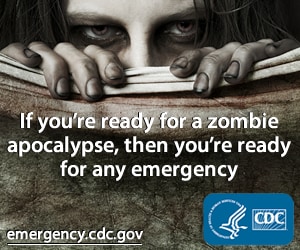
If you're ready for a zombie apocalypse, then you're ready for any emergency. emergency.cdc.gov

From time to time, I offer other advice that will hopefully ring true, and I think that this is such a case.

Following the recent events in New Zealand and Japan, I thought to take steps to check on our own emergency preparations at home. I clearly remember living through the San Francisco earthquake in 1989, and more recently the extreme cold and windstorm of December 2006 that cut off power to our own neighbourhood for nearly two weeks. I was also happy to see a recent post (with some humour) from the CDC posted here (and supported at right) sharing a few tips about preparing for real emergencies in addition to educating people on just what is a zombie apocalypse.

Shortly after the Japan earthquake on March 11, 2011, a mutual friend’s daughter who lives in Tokyo sent this email to her family, summarizing her experience. I asked and they agreed to share this first-hand information about what she could have done to be better prepared. It really brings the experience closer to home, and should taken seriously by anyone who lives in areas where earthquakes are likely to happen. (Of interest is the following link: http://www.japanquakemap.com/ As the quake wasn’t over when the first shaking stopped, all recovery activities had to take place in an environment of powerful aftershocks.)

Dear Mum,

I had bottled water and batteries but I wish I had stocked way more. The stocks in the stores disappeared in a flash and even two weeks down the track the small batteries trickle in but the two bigger sizes are still scarcer than hen’s teeth even in Osaka which is way, way away from any "affected" area. I will be on the lookout for poly bags to fill with water. Outside, with radiation floating about buckets are no chop (and inside, water sloshes out when there is a decent aftershock). I use those plastic PET bottles and I have a big camp water tank but they take up so much space when not in use. Water, water, water – to drink, and to wash dishes, self

I wish I had had a hard hat for everyone. I got bonked on the head by falling decorations. I was glad of shoes as there was broken glass everywhere. I had cotton gardening gloves but I wish I had thought to buy sturdier working ones.

Had solar recharger and batteries to recharge the mobile phones without electricity. As it turned out in the initial few days, the mobile phone network was so jammed up you couldn’t use them anyway. 

I had candles but frankly felt they were dangerous with aftershocks continuing and possible gas leaks. Didn’t think of that. The tall thin ones were useless – better were the short very fat ones – I had citronella ones in small metal buckets that we used camping to deter bugs. Very stable – nice smell to boot.

I will have more cash tucked away the next time. Hard to get to the bank/worst hot areas banks not working anyway. This time we were okay but if we had been in a harder hit area I would have been caught short I suspect.

I was glad of the canned food for the dog. She normally eats raw meat but I couldn’t get any for days!

Entertainment like cards! Whiling away the time … more of a problem than I think anyone anticipated – especially for kids stuck in an evacuation center or in Tokyo during a blackout without TV etc. Kids terrified so a good distraction too.

You never know the timing. I would have been sunk if I was at work. Flat shoes in case you have to walk home – a long, long way! In Tokyo, many people hadn’t a clue HOW to get home on foot. Family needs to have a plan – where to meet, a strategy to establish contact – in case not at home or all together. I am thinking of having some chocolate and a small bottle of water in my handbag. One of the most difficult things for me was having to leave Aimee and the dog home alone when we were still having terrible aftershocks in order to get obaasan and Elissa from where they were. I will talking to the neighbors to see if we can cooperate if there is a next time.

Things the evacuated people in the worst hit areas want more of:

Sanitary napkins and disposable nappies

Little toothpastes and toothbrushes (it is apparently bearable not to have a bath but horrible not to be able to brush your teeth! I would never have thought of that.)

Shampoo that doesn’t require water.

Loo paper – runs out quick (unless you are happy with leaves) and old telephone books/ newspaper may not be available

Medicines – non-prescription (pain relief, diarrhea (sp??) and MORE IMPT A LIST OF NAMES OF PRESCRIBED MEDICINES. Apparently a lot of the oldies have no idea what they were taking and their supplies got washed away, causing a real headache not to mention dangerous situation with people having to go cold turkey. Antiseptic wipes – little water to wash hands properly and bugs like flu/norovirus are spreading like wildfire.

Key points:

Being able to keep warm, see (light) and eat (everyone craved a hot meal but all emergency meals were cold)

A bible – great reading (history/adventure/murder -mystery/poetry etc. all in one) plus GREAT comfort. 

Had rucksacks but not applicable this time. Even in Tohoku – few people had time to get their bag. For us in Tokyo a bit further away – all supplies in a readily-available place – together – not scattered about – that EVERYONE knows about! Photocopies of important documents – passbooks, passports, insurance held preferably at a different place!

Can’t think of anything else right now….

K

A recent article on the events unfolding in Japan in the Seattle Times included a disaster preparedness checklist (available here online that you can print out at home) that outlines the basis you may want to have on hand in case of an emergency. As noted in the article on a Seattle Childrens’ pediatrician blog, there’s good information that will help prepare you and your family for disasters and emergencies, with lists of what to have on hand in your home. Additional information is available from the King Country Red Cross site and from the City of Seattle’s Preparedness site.

Of course, this is all a lot of information to take in. There are likely some great community programmes to leverage in your own area. Look for them in your own neighborhoods or your local emergency management office.

And be prepared.

(This will be a good segway to my next email on the upcoming situation we expect to occur in Russia. But, if you’re a regular reader, you already know about this issue.)

Delicious Bookmark this on Delicious Bookmark and Share

Posted at http://bit.ly/kyWlZu

Categories
Uncategorized

Russia will abolish Daylight Saving Time, Microsoft to provide updates and guidance

[Note: please see http://blogs.msdn.com/b/mthree/archive/2011/08/11/dst-081111.aspx for the released Windows Update for August 2011…]


Remember when I wondered out loud about Russia abolishing daylight saving time?

Well, I do. We’ve been following this quite closely at Microsoft, and have seen the news updates.  I have really improved my understanding of the Cyrillic alphabet in the last few months.

From the “more detail than you want to know department”: this Bill went through what’s called the first reading with their legislature (the State Duma) this past week (April 19) and will likely be signed into law within the next 14-20 days, and effective 60 days after it’s official publication. But our engineering and services teams are already anticipating this change.

As we understand it, Russia will not “fall back” and revert to the established Russian Standard time zones this fall. Instead, the country will remain on perpetual “Summer Time”. From a technical standpoint, this can be a challenging way to handle a permanent transition away from DST. This will be known, I think, as “Decree time” but effectively will be Russia’s new standard time.

We also know that other countries – including Ukraine and Belarus – may follow Russia’s lead in their move to abolish DST. I expect that as Russia enacts this Bill into law we will see other countries in the region follow suit.

[Revised 8/11/2011] Russia has signed this into law, and we’ve released KB article 2570791 for the August 2011 cumulative time zone update for Windows operating systems. See this post for more details.]

A few interesting facts on DST:

As you may know, daylight saving time was originally proposed and adopted as a response to energy conservation early in the 20th century. It was repealed after World War I in 1919, and then reinstated by the Uniform Time Act of 1966 in the U.S.

Originally, a report by the California Energy Commission in 2001 (available here) concluded that both Daylight Saving Time would probably save marginal amounts of electricity. At the time, California considered adopting DST throughout the year to address the electricity problems in the state in 2000. For the proposed Summer Double DST, the study suggested that the state would “save hundreds of millions of dollars because it would shift electricity use to low demand (cheaper) morning hours and decrease electricity use during higher demand hours.”

The Energy Commission has also published a report titled “The Effect of Early Daylight Saving Time on California Electricity Consumption” in May, 2007. The report concluded that DST had little or no effect on energy consumption in California. A more recent study from the University of Santa Barbara (available at http://www.nber.org/papers/w14429) concluded that there is little evidence that DST actually saves energy, and in the terms of the study, may actually increase residential electricity demand. The study focused on residential electricity demand over a three year period, and concluded that energy consumption actually increased approximately 1 percent during DST, and as much as 2 to 4 percent in the fall. The authors also hypothesize that the impact of the energy increase during DST would likely be higher in other parts of the U.S.

Health concerns also play a role, as recent studies showed an increase in heart attacks, sleep disorders and other problems associated with time changes. As I noted in this article, the Russian government originally considered abolishing daylight saving time in the country as there are serious negative impacts on people’s health, calling out how the time changes attributed to up to 70,000 premature deaths a year in Russia alone. They cited “medical emergency calls increasing by 12% in the first two weeks after each change, suicide rate jumping 66%, accident rate rising by 29%, heart attack rates – by 75%.” This research was also supported by a Swedish study referenced here.

So, that’s all nice, but what’s Microsoft doing about this change?

We’re working hard at Microsoft on this change at many different levels.  As past readers of this blog will know, most applications and services reference the underlying Windows OS for their TZ and DST rules, with some exceptions. This change in Russia has the potential for worldwide impacts on time references for multinational customers. Updates will be important not only for users in Russia but for connected systems around the world.

As such, our Windows team that follows DST and TZ changes globally will provide guidance to all product and services teams on the changes as the measure is formalized and put into law. We will announce more details on our support and updates to our products and services in the upcoming weeks and ensure that the changes are represented into our regularly scheduled Windows OS updates for DST and time zones.

[Added 05312011]  At this time, in preparations for the changes to the UTC offsets and elimination of DST in Russia, we plan to include the changes for the Windows Daylight Saving Time Cumulative Update, scheduled to be published in August, 2011. We will also include a roll-up of DST hotfix changes released during 2011, including those for Fiji, Samoa, Turkey, Chile, Egypt, Morocco and Newfoundland. See this post for more details. While Microsoft’s Services infrastructure will be updated to reflect these DST changes, it’s important that your computers — both clients and servers that connect to and interact with these services — should have the Windows DST updates applied in order to ensure data integrity.

We’ll also provide guidance and updates to help support the new changes in Russia run as smoothly as possible on our corporate site on DST at http://www.microsoft.com/time, with worldwide guidance and details on this important change. This site will provide the information needed by our customers and partners to react and issue updates to their products and services to accommodate this change. Our groups around the world will promote these changes locally, similar to the work that Microsoft New Zealand provided on http://www.microsoft.co.nz/timezone, supported and promoted by the efforts of the government here. For the change in Russia, we provide specific details and guidance in country at http://support.microsoft.com/gp/cp_dst/ru.

Which reminds me: we are also communicating our recommendations to help achieve more seamless transitions to new DST and time zone policies. (More information is also available at http://support.microsoft.com/gp/dst_ms_response.)

That’s a lot of work. Так давайте работать! 😉

Tags: Microsoft, Daylight Saving Time, Daylight Savings Time, RSS, DST, Russia

Also available via http://bit.ly/fiyMlX

Delicious Bookmark this on Delicious Bookmark and Share

Categories
Uncategorized

Announcements: Supporting the next version of the Internet with IPv6 SP1

In my job at Microsoft, I worry about lots of things, not the least of which is where I parked my car this morning.MP900411803[1]

I worry about Russia’s move to abolish Daylight Saving Time, where to eat in Las Vegas, and the transition to ipv6. (Of course, our other announcement today eliminating the clock from the Windows OS should address the challenges of ever shifting DST scheduled and time zones.)

I recall a great headline last year from the good folks at ZDNet: IPv6: The end of the Internet as we know it (and I feel fine). Paraphrasing a classic REM song is fine, but in the views of some, IPv6 is not 2012. (With a nod to the Mayan calendar, which ends or renews — depending on your side of the debate — December 21, 2012, when a new Mayan Calendar count begins.) These make for great headlines. But many companies – including Microsoft – have been working on the transition to IPv6 for several years. Like any change, it’s always good to review where you and your industry is when it comes to migrating to a new technology or system.

Although IPv6 is designed to solve many of the problems of the current version of the IP (IPv4), we believe that this should be enough IP addresses for a few more years. Although IPv6 provides improved security, autoconfiguration, and extensibility, we know that a limited number of companies are reluctant to support the first release of a new product, and often wait for Service Pack 1 to be released.

So today, we are happy to announce the next move to the Internet Protocol, IPv6 SP1, the first sustained engineering service pack update to IPv6.

This innovative and just plain one better service pack will provide improved business value, ease of use and an incentive for customers to migrate to the next generation of the Internet. Its use will also expand the capabilities of the Internet and enable a variety of valuable and exciting scenarios. Realizing far too late that eventually these IPv4 addresses would be exhausted, Internet Protocol version six (IPv6) was mapped out in the 1990’s and then published in 1998 as the next step in IP.  IPv6 is 128-bit, which provides support for many more devices. 3.4 to the 128th, to be exact, or 340,282,366,920,938,463,463,374,607,431,768,211,456 IP addresses. IPv6.1 further embraces the move to social networking and the cloud by adding support for roughly twice as many addresses (2 to the 129th IP addresses – or 680,564,733,841,876,926,926,749,214,863,536,422,912) by allowing emoticon suffixes to the current set supported in IPv6.

There has been tremendous support in the marketplace for the announcement of IPv6.1.  Industry visionary Dan Jump, CEO of Contoso gave his early endorsement to the coming service pack at a joint press conference today. "Just as we’ve supported virtually every product and service Microsoft has ever brought to market, we’ve also been early testers on SP1 for IPv6. With this new release, we’ve been very happy in the support we’ve received from Microsoft. The entire Contoso family – with the exception of former CIO Albert V. Leems – are excited to see this next step in Internet. I’m personally excited to see where I’ll keep all of my new 428 octillion Internet enabled devices."

(In a separate announcement, Contoso announced that Mr. Leems announced has decided to leave the company effective immediately "to spend more time with his family.")

Please note that build-to-build upgrades for the IPv6.1 beta, Release Candidate (RC) or Release to Manufacturing (RTM) will be supported. If you have installed the beta or RC of SP1, you must uninstall it first and then install the RTM of IPv6.1. Please note that IPv6.1 will not support certain alphanumerical URL key combinations and automatically redirect users to an appropriate forwarding address.

We expect that IPv6.1 will be issued about 12 months after IPv6 day, June 8, 2011.

Tags: Windows, Microsoft, IPv6, IPv4

Delicious Bookmark this on Delicious Bookmark and Share

Also available via http://bit.ly/dHQpAY
