Categories
Uncategorized

Your questions: “What’s Lisa Brummell reading?”

This from a blog reader…


“I saw the photo essay on Steve Ballmer in the New York Times and one picture with Lisa Brummell. Any idea what that ‘simplicity’ book is on her desk? And do you ever sleep? :)”


I believe the book in question is “Simplicity: The New Competitive Advantage in a World of More, Better, Faster” by Bill Jensen. It’s not my favourite book (I’ve skimmed/read it) but it has a few interesting points. I prefer the books by Linda Breen Pierce, such as Choosing Simplity and even a “12-step” simplicity programme.


And yes, I do… at least a few hours.

Categories
Uncategorized

The Hardest-Working Man in Show Business has left the building

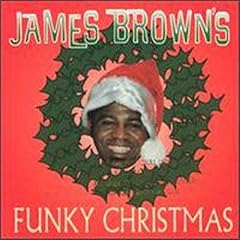
James Brown's Funky ChristmasWhile the kids were opening presents (the Nintendo DS made them forget that they had other presents still wrapped under the tree), I was sad to hear that James Brown had passed away this Christmas Day.


Although I’m sure many people remember the singer as quite the showman both on and off the stage, I had the chance to meet and work with him and his tour 20 or so years ago (a past stint in entertainment that lead to my work in high tech, when I traveled with an early Macintosh).


Even then — in his mid 50’s — Mr. Brown gave every show 110%, and was kind to the people on his crew and loved the audience: he played the longest sets of just about any performer I’ve seen play live.


If you get the chance and you have a Zune pass or Rhapsody (or other) music subscription service, take a listen today to Mr. Brown’s renditions of “Merry Christmas Baby” and “Please Come Home For Christmas” from his Funky Christmas album. You’ll be glad you did.

Categories
Uncategorized

“we never think things are insurmountable”

jinbusinessweekJ Allard — one of the few people with a name shorter than mine — is featured along with several others Microsoftie execs in BusinessWeek.  Doug Hebenthal says in the article: “In every case in which I work with J, there is a mountain to climb, there is a clear leader, and most folks would see that mountain as insurmountable,” he says. “The thing about the guys who work with J is that we never think things are insurmountable. In fact, that’s the draw.”

Categories
Uncategorized

Seth Godin on lambchops, and I don’t mean food

This week Seth Godin writes about lambchops, specifically “The lambchop theory of success.”


First, his definition:


Lambchop: “A kind, thoughtful person. Someone who keeps her promises. Someone who does great work but doesn’t always brag about it. Someone you’d like to work with again.


“It used to be that a real jerk who got results was exactly what you needed. Today, in a world that’s a lot more connected and a lot more permeable, lambchops win out”


I run into people that fall under these definitions. Today, I ran into a Lambchop. I took my son to get a bunch of new items and uniform pieces for his latest endeavour: Cub Scouts. Traveling to the Scout Shop in downtown Seattle, I realized only when we arrived that I’d left my wallet at home. Knowing that they’d soon close, I told the man behind the counter – smartly dressed in a Scout Master uniform – of my forgetfulness.


“No problem. If you want, get the information from your wife and we’ll send you on your way with everything you need today,” he told me.


Huh? I was surprised.


And then he stepped from behind the counter and proceeded to help us collect all the various items my eight-year-old would need to fit in with his other Bear Cub Scouts at their next meeting, explaining all of the ins and outs, the detailed info on each item. This was Nordstrom’s-class customer service, and coming from a man wearing a kerchif. (OK, maybe he wasn’t… but he had the official uniform on.) A few minutes later we were on our way, my son happy that he had all his gear, and me happy that I didn’t have to drive round trip twice to Seattle.


At Microsoft, we talk a lot about a focus on improving the experiences that our Customers and Partners have with us, corporate citizenship and generally remembering what it was like to be a customer of Microsoft. Talk is cheap, as they say. So as employees, we tend to be our own worst critics and supporters: we not only use our own services, software and hardware products, but we deliver feedback to product teams on the good and the bad (and sometimes the ugly ;).


And when we do this, the people that command the most respect — and frankly get the best feedback from the product teams — tend to be the ones who offer constructive and thoughtful feedback, rather than Seth’s described “real jerks” as noted above. There just seem to be more connected people working on behalf of our customers and partners these days, doing the right things.


Tags: , , .

Categories
Uncategorized

Carr, McDowell, BusinessWeek on “How Important is IT?”

Yesterday I sat in part of Bob McDowell’s session at MS101, our internal orientation for new hires. (There’s also an MS101 now offered to our external partners.) Bob is arguably one of the most dynamic speakers at the company. MS101 attendees gave him a standing ovation after his 3-4 hour talk, during which he did not use a single slide. Bob is the author of “In Search of Business Value: Ensuring a Return on Your Technology Investment” (with review available here).


During his talk, Bob mentioned the 2003 article “IT Doesn’t Matter” by Nicholas Carr, available via HBR Online. The author has reference links to this article on his web site, and there’s a good summary of the original article available here.


If you find this of interest, see also Businessweek’s brief article “Just How Important Is IT Anyway?”  It’s a discussion with Mr. Carr and Bob McDowell, talking about “whether today’s IT can offer companies a competitive advantage.” Bob said in the article that “one of the difficulties with this discussion is you can’t define what IT means today insofar as it will be absolutely accurate 5 to 10 years down the road. Unlike electricity and the railroad, you’re going to see continued innovation.”


From the article:


Where do you see this debate going?


McDowell: I think Nick and others who’ve raised this issue are doing a service because it’s causing the industry to be a lot more serious in focusing on true business value. One of the risks, and I’ll admit it, of the ’90s, was a lot of us got involved to some extent in hype and promises that exceeded reality, and some mistakes were made.


There is a lot more businesslike focus in IT today. From an industry perspective, I think you can differentiate…one supplier from another on how well they make the business case, not on how much they focus on technology as an end in itself.


Carr: Focusing on the exceptions and what can we learn from them is a much more interesting discussion than the way it started out. We’ve moved beyond the era where IT vendors can get away with just saying every new product was “strategic” and “you’ve gotta have this.”


The industry has moved beyond that. We’re at the stage of the debate where it’s focused on more concrete things that can help the actual buyers and users of technology do a better job.